
GK Technology Podcast
Ag Geek Speak: the precision ag podcast from GK Technology.
Host Sarah Lovas talks precision agriculture, ag mapping, agronomy, and drainage with the people doing the work. Full interview episodes and short Tiny Bytes explainers, all in one feed.
GK Technology Podcast
Ag Geek Speak: the precision ag podcast from GK Technology.
Host Sarah Lovas talks precision agriculture, ag mapping, agronomy, and drainage with the people doing the work. Full interview episodes and short Tiny Bytes explainers, all in one feed.
About the show
One podcast, two formats.
Ag Geek Speak is the podcast from GK Technology, the precision ag software and mapping company in Halstad, Minnesota. Every episode is published to one feed, so you get both formats wherever you listen.

Interviews and deep dives
Long-form conversations with agronomists, soil scientists, software developers, and growers on precision agriculture: variable rate, soil sampling, imagery, drainage, AI on the farm, and the people building the tools.
Browse full episodes
One precision ag topic, explained
Tiny Bytes are the short episodes of Ag Geek Speak. Each one answers a single question, from what a shapefile is to how Olsen, Bray, and Mehlich-3 phosphorus tests differ. They are numbered with a .5 between the full episodes.
Browse Tiny Bytes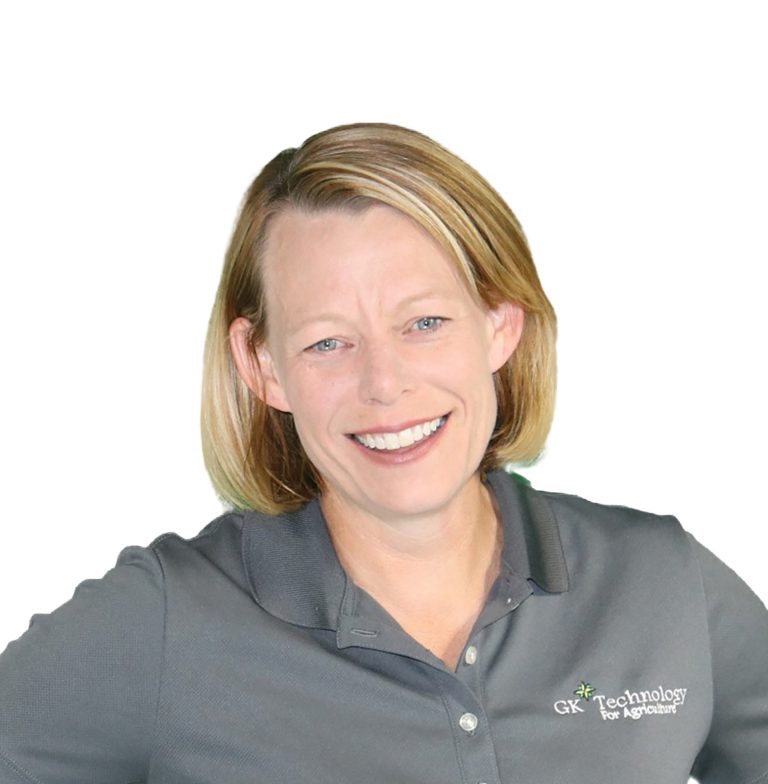
Your host
Sarah Lovas is a member of the GK Technology team. She hosts every episode, brings in guests from across the industry, and takes topic requests from listeners through the form below.
Episodes
Every episode, newest first.
Filter by format, open the show notes, read the transcript, or press play. New episodes appear here automatically when they publish.
Showing 1 to 12 of 55 episodesNewest first

9. Are We Training Tech Users Or Agronomy Thinkers Pt 2 with Chandra Langseth
We keep talking with Chandra Langseth about what it takes to turn precision ag students into confident problem solvers, not just software clickers. We break down the classes she teaches, then zoom…
Show notes
We keep talking with Chandra Langseth about what it takes to turn precision ag students into confident problem solvers, not just software clickers. We break down the classes she teaches, then zoom in on fundamentals like data organization, controller exports, and communication that holds up under real farm pressure.
In this episode we talk about:
• Precision ag and agronomy courses that build job-ready skills fast
• Internship preparation and why on-the-job learning matters
• Fundamentals first approach for agronomy and precision agriculture
• Critical thinking as the skill that connects precision agriculture with soil, weather, inputs, and economics
• Teaching mapping software by starting with computer literacy
• File organization, naming conventions, and habits that prevent lost work
• Farm field data structure that makes mapping and sharing possible
• Exporting and importing prescriptions across different equipment controllers
• Testing controller workflows before the day of application
Podcast mention:
8. A Practical Look at Precision Agriculture Training and Farm Tech with Chandra Langseth Pt 1
https://www.buzzsprout.com/2297340/episodes/20026089
18. Yes. He Mapped Lawns Too Preston Sundeen Pt1
https://www.buzzsprout.com/2297340/episodes/18257891
19. Preston Sundeen Pt 2 Teaching Precision Ag That Works Today
https://www.buzzsprout.com/2297340/episodes/18293575
https://gktechinc.com/

8. A Practical Look At Precision Agriculture Training And Farm Tech with Chandra Langseth Pt. 1
We sit down with North Dakota State College of Science's Precision Ag Tech & Precision Ag Program Coordinator and farmer Chandra Langseth to talk about the winding path that took her from…
Show notes
We sit down with North Dakota State College of Science's Precision Ag Tech & Precision Ag Program Coordinator and farmer Chandra Langseth to talk about the winding path that took her from a non-farm background into soil science and agriculture. We also get into what precision ag looks like on a working North Dakota farm and how she brings real farm decisions into her classes at NDSCS.
In this episode we chat about
• Chandra’s background in North Dakota and how she finds her way into agriculture
• switching majors and discovering soil science through key classes and mentors
• why agriculture needs non-farm perspectives to solve real challenges
• how soil variability changes management decisions across a single operation
• corn, soybeans, and sunflowers plus the realities of irrigation and drainage work on-farm
• remote irrigation monitoring that texts when pivots stop
• starting variable rate fertility with limited equipment capability
• using a real farm as a class problem for mapping and decision-making
• what she teaches at NDSCS: intro precision ag, mapping, scouting, pesticide prep, weed ID
• how NDSCS programs split between precision ag tech and precision agronomy career paths
Find out more about NDSCS's Agriculture Program here: https://ndscs.edu/agriculture/
https://gktechinc.com/

7. What If Farm Data Had One Common Language? ADAPT with Hudson Fuller Pt. 2
We keep pulling back the curtain on why monitor compatibility is still hard in precision ag, even when everyone says they “just need a shapefile.” Hudson Fuller explains how AgGateway’s ADAPT standard…
Show notes
We keep pulling back the curtain on why monitor compatibility is still hard in precision ag, even when everyone says they “just need a shapefile.” Hudson Fuller explains how AgGateway’s ADAPT standard and plugins can shrink guesswork, speed up exports and imports, and move the industry toward clearer data interoperability.
In this episode, we also talk
• AgGateway’s role in setting precision agriculture data standards
• Why interoperability matters for yield data, soil tests, and controller exports
• The hydraulic hookup analogy for incompatible monitor formats
• Real controller constraints like polygon limits, vertex limits, and file size
• ISOXML, GeoJSON, and GeoParquet differences and when each helps
• Why GeoParquet can reduce file size but not polygon count
• GeoTIFF prescriptions as raster surfaces with per-pixel values
• How ADAPT targets GeoParquet for vector and GeoTIFF for raster
• Plugin-based workflows vs hard-coding new proprietary formats
• Estimated engineering time for new exports with and without plugins
• ADAPT imports for viewing as-applied and yield maps in ADMS
• Batch exporting multiple fields through ADAPT export in ADMS X
• Using the ADM plugin and ADAPT Visualizer to validate prescriptions
List of companies who have publicly announced they are utilizing ADAPT and support the project:
https://adaptframework.org/companies-supporting-adapt/
As always, with GK we have map, and an app, for that!
https://gktechinc.com/

6. ADAPT Made Simple For Precision Ag with Hudson Fuller Pt. 1
We talk with Hudson Fuller from GK Technology’s product development team about the ADAPT standard and why ADMS X is adding an ADAPT export for prescriptions. We break down shapefiles versus JSON…
Show notes
We talk with Hudson Fuller from GK Technology’s product development team about the ADAPT standard and why ADMS X is adding an ADAPT export for prescriptions. We break down shapefiles versus JSON and GeoJSON, then connect those basics to real controller workflows like ISOXML task data for CNH monitors.
In this episode, we talk
• who Hudson is and how he works on ADAPT at GK Technology
• what ADAPT is and why AgGateway pushes an industry standard
• why shapefiles break so easily and how the DBF schema causes controller-specific issues
• how JSON and GeoJSON work as single-file containers for data and geometry
• why a common data language reduces export guesswork across monitors
• the difference between the 2014 ADAPT framework and the newer ADAPT standard
• how ADAPT plugins translate an internal model into controller-ready file types
• what ADMS X is testing with a beta ADAPT export to ISOXML task data
• which controllers use ISOXML task data, including IntelliView 12 and Pro 1200
• why task data can support more detailed prescriptions than typical shapefile exports
• what we still need to learn through in-cab testing and user feedback
ADAPT Framework Website: https://adaptframework.org/
At GK Technology, we have a map, and an app, for that!
https://gktechinc.com/

5. Live! From Ag Mafia's Agronomy Conference
Special episode! If the audio sounds a little different, we are live from Ag Mafia's Agronomy Conference. We trade precision agriculture hot takes with a room full of farmers and agronomists, starting…
Show notes
Special episode! If the audio sounds a little different, we are live from Ag Mafia's Agronomy Conference. We trade precision agriculture hot takes with a room full of farmers and agronomists, starting with what makes a zone map trustworthy and ending with what “precision” really means when equipment, software, and agronomy do not line up. We share real field stories from prairie potholes, yield map pitfalls, fertilizer blending headaches, and the surprisingly fun side of variable rate prescriptions.
In this episode, you can find us...
• explaining GK Technology’s precision agriculture mapping tools and why field variability matters
• breaking down the three pillars of precision ag: agronomy, equipment, and software
• exploring why North Dakota adopts precision ag so fast, including field size, crop diversity, and zone sampling
• discussing complex variable rate fertilizer blending when P and K maps do not match
• debating what limits precision agriculture most: talent, equipment capability, controllers, and livestock knowledge gaps
• arguing that a final zone map should make intuitive sense to the farmer, with the farmer as a key data layer
• challenging the idea that precision ag always increases yield, focusing on ROI, realistic yield goals, and mineralization uncertainty
• unpacking why yield maps are useful but not sufficient, including calibration issues and different causes of low yield
• sharing favorite VRT projects, from IDC soybean maps to variable rate residual herbicides by pH and texture
Mentioned in the episode: Ag Geek Speak Episode 1: Pioneering Precision Agriculture https://www.buzzsprout.com/2297340/episodes/14357348
More info on Ag Mafia and their upcoming Agronomy Conference: https://www.facebook.com/agmafiallc/
https://gktechinc.com/

4. Getting Started with Management Zones - Spring 2026 Recap Pt. 2
High fertilizer and seed costs make field-by-field efficiency feel urgent, so we walk through how variable rate technology turns “I know my field” into something your equipment can actually run. We also…
Show notes
High fertilizer and seed costs make field-by-field efficiency feel urgent, so we walk through how variable rate technology turns “I know my field” into something your equipment can actually run. We also share the simplest places to start, what details matter with controllers and file exports, and how older gear can still deliver real ROI.
In this episode, we talk
• spring 2026 recap through the lens of input costs, weather, and markets
• asking field-level questions that reveal profitable variability
• building the workflow from boundary to variability map to prescription
• choosing between zone maps from imagery and grid sampling maps
• understanding why controller type changes how a shapefile must be written
• reducing frustration by matching prescriptions to controller capabilities
• starting with variable rate seeding for corn and soybeans
• adjusting populations on droughty hilltops and sandier soils
• making air seeders and multi-tank carts part of a precision ag plan
• using research, forums, and testing to make older controllers work
If you're interested in how GK can help you get started implementing VRT on your farm, check out our website for more information.
https://gktechinc.com/

3. Winter Is Chasing Us And So Is Urea - Spring 2026 Recap Pt. 1
Fertilizer prices and spring weather pressure forced a hard look at how we manage time, logistics, and precision across every field. We break down why variable rate fertilizer is becoming the practical…
Show notes
Fertilizer prices and spring weather pressure forced a hard look at how we manage time, logistics, and precision across every field. We break down why variable rate fertilizer is becoming the practical choice, especially given the conditions of spring 2026 and how soil testing and better planning help keep expensive inputs from getting underutilized.
In this episode, Sarah and Jodi discuss
• fertilizer prices reshaping decision-making around variable rate technology
• balancing fast spring logistics with precise input placement in short seasons
• using fall planning to line up soil sampling, maps, prescriptions, and controller readiness
• why soil tests unlock better zone decisions, especially in saline and low-yield areas
• adapting sampling depth to region, moisture, and nitrogen movement
• using post-harvest and in-season nitrate tests to measure overapplication in corn
• operational constraints like one-bin applications driving creative fertility timing and placement
• noticing field variability first, then building a realistic plan to improve over time
Need a precision map or the software to make your own? Check our website out!
www.gktechinc.com
https://gktechinc.com/

Spring Planting Playbook: Precision Ag Prep for Every Planting Season
We walk through what we’re thinking about for spring planning in 2026, from realistic yield goals to the map decisions that actually save money when inputs are high. We keep it practical…
Show notes
We walk through what we’re thinking about for spring planning in 2026, from realistic yield goals to the map decisions that actually save money when inputs are high. We keep it practical by tying variable rate strategies to agronomy, controller readiness, and the real limits in each zone.
In this episode, Sarah and Jodi talk
• setting realistic yield goals for averages and zones
• handling fields without recent soil sampling using yield potential and zone logic
• separating salty areas from other low zones to avoid wasting fertilizer
• using variable rate seeding to manage sand, salinity, IDC, drought and disease pressure
• balancing population changes with weeds, canopy and row spacing
• treating soil pH as a high-cost lever and avoiding too-good-to-be-true fixes
• improving phosphorus and zinc efficiency through banding and seed safety planning
• exploring variable rate residual herbicides with pulse width modulation
• powering up controllers early and running test prescriptions to avoid spring surprises
Thanks for listening and come back next time for another episode of Ag Geek Speak! At GK Technology, we have a map, and an app, for that.
VRT Herbicides with Kyle Okke pt. 1: https://www.buzzsprout.com/2297340/episodes/18096941-15-variable-rating-herbicides-with-kyle-okke-pt-1
VRT Herbicides with Kyle Okke pt. 2: https://www.buzzsprout.com/2297340/episodes/18144514-16-variable-rating-herbicides-with-kyle-okke-pt-2
VRT Herbicides with Kyle Okke pt. 3: https://www.buzzsprout.com/2297340/episodes/18216234-17-variable-rating-herbicides-with-kyle-okke-pt-3
Seed Safety Calculator (SDSU): https://extension.sdstate.edu/starter-fertilizer-calculator-and-final-report
https://gktechinc.com/

1. Talking Cybersecurity with Tech Support Farm's Chris Sherman
We sit down with Chris Sherman of Tech Support Farm to explore how cybercrime targets modern agriculture and what practical steps protect farms and agribusinesses from losses. From avoiding spoofed invoices to…
Show notes
We sit down with Chris Sherman of Tech Support Farm to explore how cybercrime targets modern agriculture and what practical steps protect farms and agribusinesses from losses. From avoiding spoofed invoices to equipment lockouts, we share simple defenses any grower, consultant, or retailer can start today.
In this epsiode, we discuss with Chris
• why agriculture is a prime target for cybercrime
• social engineering that targets busy planting and harvest seasons
• real cases of spoofed invoices and wire fraud
• risks in connected equipment and robotics
• password best practicesand password managers
• consumer email vs commercial domains and DMARC
• backups, rapid recovery, and remote support
• reducing tech fatigue with managed services
• how Fence Check evaluates your cyber posture
• Tech Support Farm's free webinar on passwords, phishing, and email security
You can find out more about Tech Support Farm at https://techsupport.farm/
Complete your free Tech Support Farm Fence Check at https://techsupport.farm/fencecheck/ to get a free, actionable report within 48 hours
Find our more about Tech Support Farm's winter webinars https://techsupport.farm/winter-webinars/
At GK Technology, we have a map and an app for that!
https://gktechinc.com/

20. Using Autonomous Tractors on the Farm with Matt Krueger
We talk with Matt Krueger about his field-level view of autonomous tillage with a 9R series John Deere tractor, from kit installation to dust-driven safety stops, and how better boundaries and AutoPath…
Show notes
We talk with Matt Krueger about his field-level view of autonomous tillage with a 9R series John Deere tractor, from kit installation to dust-driven safety stops, and how better boundaries and AutoPath boost both uptime and data quality. Matt's story centers on labor flexibility, real costs, and where autonomy should expand next.
In this special hour-long episode we talk:
• autonomy kit details, JDLink Boost connectivity, dual receivers
• autonomy-grade boundaries and safe offsets near obstacles
• dust sensitivity, camera logic, alerts and overrides
• AutoPath benefits for cleaner headlands and data integrity
• remote control of depth, pressure and implement settings
• ROI framed as uptime and labor flexibility, not replacement
• likely next targets for autonomy: sprayers and air seeders
• subscription pricing models and reliability trade-offs
• NDVI plus as applied maps to trace application misses
• skills and fallbacks when GPS degrades or sensors fail
With GK Technology, we have a map, and an app, for that!
https://gktechinc.com/

19. Preston Sundeen Pt. 2 - Teaching Precision Ag That Works Today
Welcome back to the second part of our conversation with Preston Sundeen to explore how a two-year ag program prepares students for precision agriculture careers by building real-world skills across hardware, software,…
Show notes
Welcome back to the second part of our conversation with Preston Sundeen to explore how a two-year ag program prepares students for precision agriculture careers by building real-world skills across hardware, software, GIS, and agronomy. Sundeen's focus is practical confidence: clean data, sound troubleshooting, critical thinking, and learning to ask better questions.
We also talk about...
• defining precision ag as practical, cross-disciplinary work
• balancing agronomy, GIS, hardware and software fundamentals
• building file discipline, projections and boundary workflows
• sourcing NAIP, PLSS, and satellite imagery effectively
• controller setup, CAN bus basics and diagnostics
• using simulators to teach certain types of controllers
• as-applied data, JD Operation Center, SMS, and FieldView exposure
• teaching troubleshooting: manuals, credible videos and tests
• digital literacy and AI as time-saving tools
• measuring success by momentum, confidence and community impact
We had an excellent conversation with Preston and we know you'll enjoy it too.
Part 1 of our conversation: https://www.buzzsprout.com/2297340/episodes/18257891
https://gktechinc.com/

18. Yes, He Mapped The Lawns Too Preston Sundeen Pt. 1
We sit down with Preston Sundean to trace a path from farm kid to precision ag educator and entrepreneur. We dig into teaching ADMS, turning data into fast prescriptions, and why critical…
Show notes
We sit down with Preston Sundean to trace a path from farm kid to precision ag educator and entrepreneur. We dig into teaching ADMS, turning data into fast prescriptions, and why critical thinking matters more than button sequences.
In this episode we discuss...
• Preston's North Dakota farm roots and agribusiness training
• Career moves from ag retail to precision ag education
• COVID pivot into entrepreneurship and insurance
• Running a classroom like a workplace
• The ADMS learning curve and teaching methods
• Turning soil tests into fertilizer prescriptions fast
• Wireless data transfer and mobile office workflows
• Creative ADMS uses for claims and small jobs
• Lawn care mapping, NAIP imagery, and bidding
• GPS limits, lightbars, foam markers, and as‑applied maps
• The case for critical thinking across tools
Stick around next week for part two of our conversation with Preston Sundeen.
At GK Technology, we have a map and an app for that!
https://gktechinc.com/
Request an ag topic
Ask Sarah.
Do you have an ag related topic you would like Sarah to discuss on the podcast? Send it in with the form.
Do you have an ag related topic you would like Sarah to discuss?
Questions
About Ag Geek Speak.
Ag Geek Speak is the podcast from GK Technology Inc, the precision ag software and mapping company in Halstad, Minnesota. Team member Sarah Lovas talks about precision agriculture, agriculture mapping, agronomy, and drainage with guests from across the industry.
Tiny Bytes are the short episodes of Ag Geek Speak, usually 7 to 15 minutes, each covering one precision ag topic such as NDVI, shapefiles, soil sampling, or GPS versus GNSS. They are numbered with a .5 (for example 6.5) and sit between the full episodes in the same feed. Use the Tiny Bytes tab above to see only those.
Right here on this page, on Buzzsprout, on YouTube, or in any podcast app by adding the RSS feed.
Yes. Every episode has a transcript. Use the "Read transcript" link under any episode above.
Use the Ask Sarah form on this page. Tell her the ag topic you want covered and she may feature it in a future episode.
Tiny Bytes now live on this page with the full episodes. Select the Tiny Bytes tab to see only the short episodes.
Contact
Get in touch with GK.
Tell us about your operation and what you're trying to solve.
Halstad, MNA real person on the Halstad team reviews every message.
Call
Follow GK
Find us
GK Technology, Inc.
305 5th Street East
Halstad, MN 56548