
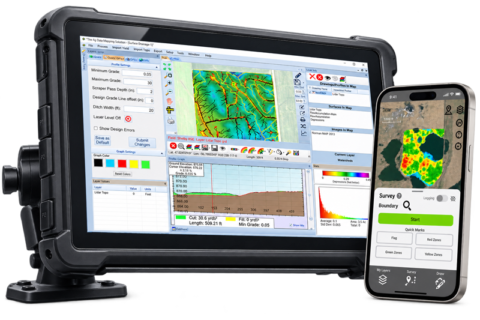
GK Technology Podcast
Ag Geek Speak: the precision ag podcast from GK Technology.
Host Sarah Lovas talks precision agriculture, ag mapping, agronomy, and drainage with the people doing the work. Full interview episodes and short Tiny Bytes explainers, all in one feed.
GK Technology Podcast
Ag Geek Speak: the precision ag podcast from GK Technology.
Host Sarah Lovas talks precision agriculture, ag mapping, agronomy, and drainage with the people doing the work. Full interview episodes and short Tiny Bytes explainers, all in one feed.
About the show
One podcast, two formats.
Ag Geek Speak is the podcast from GK Technology, the precision ag software and mapping company in Halstad, Minnesota. Every episode is published to one feed, so you get both formats wherever you listen.

Interviews and deep dives
Long-form conversations with agronomists, soil scientists, software developers, and growers on precision agriculture: variable rate, soil sampling, imagery, drainage, AI on the farm, and the people building the tools.
Browse full episodes
One precision ag topic, explained
Tiny Bytes are the short episodes of Ag Geek Speak. Each one answers a single question, from what a shapefile is to how Olsen, Bray, and Mehlich-3 phosphorus tests differ. They are numbered with a .5 between the full episodes.
Browse Tiny Bytes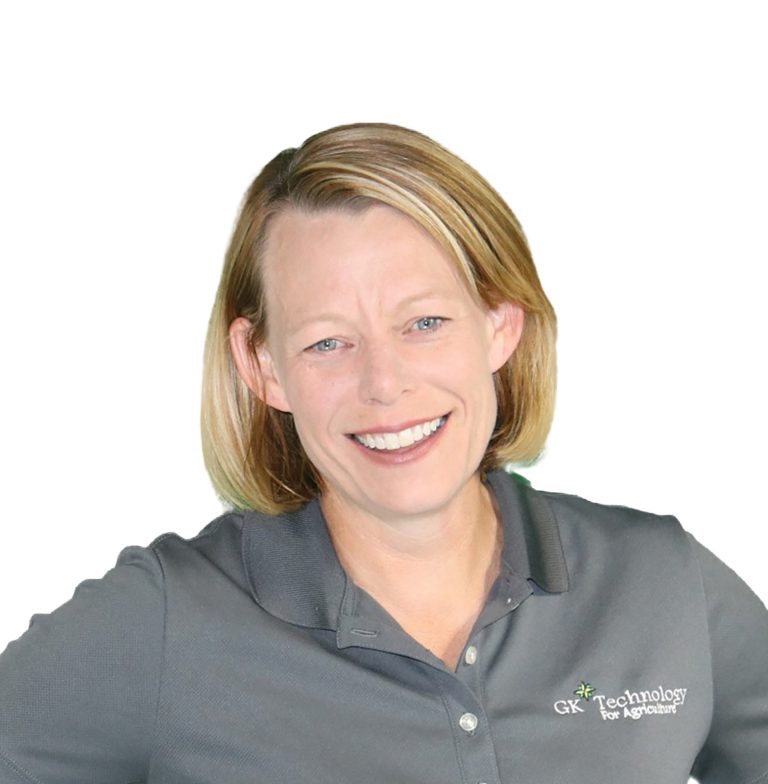
Your host
Sarah Lovas is a member of the GK Technology team. She hosts every episode, brings in guests from across the industry, and takes topic requests from listeners through the form below.
Episodes
Every episode, newest first.
Filter by format, open the show notes, read the transcript, or press play. New episodes appear here automatically when they publish.
Showing 37 to 48 of 96 episodesNewest first

10.5 Tiny Bytes: What's the Deal with UTM?
Using the correct UTM (Universal Transverse Mercator) zone is crucial when working with GIS data mapped to a UTM zone. We explain how projections work to translate locations from Earth's spherical surface…
Show notes
Using the correct UTM (Universal Transverse Mercator) zone is crucial when working with GIS data mapped to a UTM zone. We explain how projections work to translate locations from Earth's spherical surface to flat maps, and why UTM zones are critical for accurate agricultural mapping.
• UTM divides Earth into 60 zones, each six degrees of longitude wide
• UTM choice errors cause maps to appear in completely wrong locations, like oceans
• Creating maps in the wrong UTM zone leads to unusable prescriptions for field operations
• Maps created in one UTM zone but opened in another will show incorrect positions
• Farms located on UTM zone boundaries may encounter projection issues more frequently
• Always verify your UTM zone settings when working in mapping software
• Turn on background maps to confirm your fields are projecting in the correct location
• Reprojection tools in ADMS can help fix UTM errors
Avoid the sharks and floaties, check your UTM!
https://gktechinc.com/
https://gktechinc.com/

10. AI and Human Interactions Pt. 2 OR How I Learned to Stop Worrying and Love AI feat. Travis Yeik
Travis Yeik joins us for part two of our deep dive into the interaction of artificial intelligence and humans in agriculture, exploring current applications and future possibilities of this transformative technology in…
Show notes
Travis Yeik joins us for part two of our deep dive into the interaction of artificial intelligence and humans in agriculture, exploring current applications and future possibilities of this transformative technology in farming.
We chat about...
• Weather forecasting is already utilizing AI to provide crucial planning information to farmers
• Precision agriculture applications include weed identification, disease monitoring, and targeted spraying
• Livestock operations benefit from AI monitoring of animal health, feed consumption, and production metrics
• Irrigation management systems use AI to optimize water usage and placement
• Biogenetics represents a revolutionary frontier where AI is accelerating crop development
• Protein structure mapping has advanced from mapping dozens to millions of proteins in just years
• Future AI applications could include profit maximization planning and automated stand count analysis
• Adoption challenges mirror previous farm technology introductions like auto-steer systems
• Data collection remains a critical challenge for AI implementation in agriculture
• Human oversight will remain essential even as AI capabilities continue to advance
Join us as we continue exploring how technology is transforming agriculture and what it means for the future of farming.
https://gktechinc.com/
https://gktechinc.com/

9.5 Tiny Bytes: Variable Yield Goals: The Foundation of Smart Farming
Precision agriculture focuses on treating different parts of a field according to their unique yield potential instead of applying the same approach everywhere. Variable rate applications start with establishing realistic yield goals…
Show notes
Precision agriculture focuses on treating different parts of a field according to their unique yield potential instead of applying the same approach everywhere. Variable rate applications start with establishing realistic yield goals for different areas within a field based on their consistent performance patterns.
In this episode, Sarah and Jodi discuss:
• Using historical yield data to determine which areas consistently yield higher or lower
• Combining yield history with grid soil sampling data to create targeted fertilizer applications
• Assigning variable rate yield goals by zone when managing variability
• Being realistic about low-yield areas that consistently underperform
• Recognizing how nutrients accumulate in low-yield areas while being depleted in high-production zones
• Creating variable rate maps even with just composite soil samples by setting different yield goals
• Understanding precision agriculture is primarily about efficiency, not just yield maximization
• Managing costs by reducing inputs where appropriate while giving high-producing areas what they need
https://gktechinc.com/
https://gktechinc.com/

9. Will AI Replace Farmers? The Role of Human Interaction in Artificial Intelligence Featuring Travis Yeik
We explore the future of human decision-making in precision agriculture and the role artificial intelligence might play in supporting – not replacing – farmers.• Travis Yeik brings unique perspective from his background…
Show notes
We explore the future of human decision-making in precision agriculture and the role artificial intelligence might play in supporting – not replacing – farmers.
• Travis Yeik brings unique perspective from his background in farming, agronomy, and software development
• AI has existed since the 1950s but recent advances in computing power and algorithms have accelerated development
• Farmers must make complex decisions integrating agronomy, mechanics, business, finance and weather variables
• Current AI excels at specific tasks but cannot integrate all the complex knowledge domains needed for comprehensive farm management
• The true potential of AI is as a decision-support tool that helps farmers process overwhelming amounts of data
• Data availability remains a significant challenge for training AI models capable of nuanced agricultural recommendations
• Increasing farm sizes and tighter margins create a need for better decision-support tools, making AI potentially valuable
• Integration of AI should enhance rather than replace the human judgment and experience essential to farming
In part two of our conversation, we'll continue exploring how AI tools can help make farmers and agronomists more efficient without replacing their essential roles.
https://gktechinc.com/
https://gktechinc.com/

8.5 Tiny Bytes: On the Root of a Drive
We tackle a common technical prescription writing question in this Tiny Byte: what does it mean to place a prescription on the root of a drive and why does it matter. Understanding…
Show notes
We tackle a common technical prescription writing question in this Tiny Byte: what does it mean to place a prescription on the root of a drive and why does it matter. Understanding this simple concept can solve many frustrating issues when loading prescriptions onto different monitors.
• The "root" of a drive is the main directory—the blank space you see when first opening the drive
• Different farm equipment requires prescription files in specific locations
• Page 203 of the 2025 ADMS User Manual lists out where prescriptions need to be saved on different monitors
• Some monitors require files directly on the root (no folders)
• The slash (/) in file paths just indicates folder structure
• Never use special characters in file or folder names—stick to letters, numbers, and dashes
• Proper file placement ensures controllers can find and use your prescription files
https://gktechinc.com/
https://gktechinc.com/

8. Code, Sheep, and Field Management: How Hudson Fuller is Revolutionizing ADMS pt. 2
Hudson Fuller, computer scientist and GK Technologies' newest software developer, discusses the upcoming ADMS software updates and his agricultural background while sharing insights into his current projects and future aspirations.• Working on…
Show notes
Hudson Fuller, computer scientist and GK Technologies' newest software developer, discusses the upcoming ADMS software updates and his agricultural background while sharing insights into his current projects and future aspirations.
• Working on transitioning ADMS to the new .NET framework after Microsoft's discontinuation of the current framework
• Emphasizes that users will notice minimal differences with the update, possibly just crisper-looking buttons
• Explains the importance of diverse bug testing as programmers tend to test consistently while users interact with software unpredictably
• Began his agricultural journey at age three showing Baby Doll Southdown sheep at the Watertown Farm Show
• Showed various sheep breeds throughout his youth including full-blooded Southdowns and Hampshires
• Currently enhancing the Field Info tab in ADMS to automatically generate field boundaries and import NAIP images
• Developing XML export functionality for field information to improve data sharing and accessibility
• Lives with two other GK Technology employees – his parents Paul (drainage expert) and Kendra (server data management)
• Interested in future development of proprietary data collection using camera, radar, or lidar technology
• Joining the product development team brings exciting new possibilities for GK's precision agriculture tools
https://gktechinc.com/
https://gktechinc.com/

7.5 Tiny Bytes: From Bits to Petabytes: Understanding Computer Storage
We explore the fundamentals of digital storage and how it powers precision agriculture, covering basic bytes to the massive petabyte servers at GK Technology that store agricultural imagery and data.• A byte…
Show notes
We explore the fundamentals of digital storage and how it powers precision agriculture, covering basic bytes to the massive petabyte servers at GK Technology that store agricultural imagery and data.
• A byte equals eight binary bits and typically represents a single character or piece of data in computer language
• Digital storage units progress from kilobytes (thousand) to megabytes (million) to gigabytes (billion) to terabytes (trillion) to petabytes (thousand terabytes)
• GK Technology's Halstead office maintains a petabyte of storage containing agricultural data for most of the United States and three Canadian provinces
• Storage includes shapefile formats, NAIP imagery, Lidar data, and two satellite libraries: Landsat (30m resolution back to 1984) and Sentinel (10m resolution from 2016)
• Precision ag software users access this massive data repository when creating drainage maps or automated management zones
• Higher resolution imagery like drone photos requires significantly more storage space, creating challenges for agricultural data management
https://gktechinc.com/
https://gktechinc.com/

From Pitcher to Programmer: Hudson Fuller's Journey pt. 1
Hudson Fuller, GK Technology's newest full-time employee and computer science graduate, shares his journey from baseball player to agricultural data specialist working on the ADAPT standard integration.• Hudson's connection to GK began…
Show notes
Hudson Fuller, GK Technology's newest full-time employee and computer science graduate, shares his journey from baseball player to agricultural data specialist working on the ADAPT standard integration.
• Hudson's connection to GK began through family ties and company retreats before pursuing internships during college
• Completed a computer science degree at Dakota State University while playing college baseball
• Created an AI baseball pitch predictor that achieved 80% accuracy in predicting pitch outcomes
• Currently coaches high school baseball and plays for the local amateur team
• Working on implementing the ADAPT standard to unify agricultural data formats across different systems in ADMS
• ADAPT aims to standardize how agricultural data is stored and transferred between different controllers and software
• The standardization is similar to how hydraulic hookups were standardized to allow equipment compatibility
• Different file types (shapefiles, GeoJSON, ISO XML) serve different purposes in storing agricultural data
• Modern controllers can process thousands of data points instantly to vary application rates accurately
Join us for part two of our conversation with Hudson in the next episode of Ag Geek Speak.
https://gktechinc.com/

6.5 Tiny Bytes: Plant Tissue Testing 101
Plant tissue testing offers farmers and consultants valuable insight into crop nutrient status and helps diagnose field issues when properly conducted. We explain the science behind tissue testing and share practical tips…
Show notes
Plant tissue testing offers farmers and consultants valuable insight into crop nutrient status and helps diagnose field issues when properly conducted. We explain the science behind tissue testing and share practical tips for getting actionable results.
• Tissue testing can help to evaluate nutrient status to understand crop health at various growth stages
• Troubleshoot field issues by comparing samples from healthy and problematic areas
• It is important to sample the correct plant part according to the crop's growth stage
• Mobile nutrients show deficiency in lower leaves while immobile nutrients affect upper leaves first
• Remember to remove soil contamination from samples, especially when checking iron levels
• Tissue tests can help to identify the problem while soil tests help determine corrective actions
• Have a specific goal in mind before collecting tissue samples
• Take both tissue and soil samples when diagnosing nutrient deficiencies
https://gktechinc.com/

6. Pioneers of Precision Ag: Shawn Kasprick Part 2
We continue our conversation this week with precision ag geek Shawn Kasprick of Simplot. Shawn shares how precision agriculture capabilities have evolved from floppy disks to satellite imagery, letting farmers see their…
Show notes
We continue our conversation this week with precision ag geek Shawn Kasprick of Simplot. Shawn shares how precision agriculture capabilities have evolved from floppy disks to satellite imagery, letting farmers see their operations all the way through from farm to field application.
Some topics we cover in this episode:
• Adapting precision agriculture for orchards with specialized equipment that applies fertilizer between rows
• Creating variable rate soil-applied herbicide maps based on soil property levels
• Using satellite imagery to identify wild oat patches before soybean emergence for targeted herbicide applications for subsequent wheat crops
• Developing variable rate fungicide applications for white mold management using crop density data
• Combining multiple data sources with AI to potentially identify specific pests in the future
• The importance of ground-truthing remote-sensed data to verify what's actually happening
• Ensuring technology enhances decision-making rather than just collecting data
Ask your agronomist or consultant about creative ways you could use precision agriculture on your farm. The technology is there—you just need to connect it with good agronomy.
https://gktechinc.com/

5. Pioneers of Precision Ag: Shawn Kasprick Part 1
Shawn Kasprick shares his journey from farm kid to precision agriculture pioneer with Simplot Grower Solutions, detailing how early developments in the field shaped the technology farmers use today.In the episode, Sarah…
Show notes
Shawn Kasprick shares his journey from farm kid to precision agriculture pioneer with Simplot Grower Solutions, detailing how early developments in the field shaped the technology farmers use today.
In the episode, Sarah and Jodi sit down with Shawn and discuss
- Shawn's background growing up on a farm in Walsh County North Dakota
- Shawn's educational background, which includes dual bachelor's degrees in Crop and Weed Sciences and Soil Science from NDSU and a master's in Agronomy from Iowa State University
- Starting a precision ag program with Simplot when handed a laptop and told "good luck"
- The evolution of grid sampling to zone management in North Dakota
- Pioneering deep soil sampling for sugar beet production
- Programming to overcome data integration challenges and the importance of understanding what data you're looking at
- The emphasis that good precision ag always starts with solid agronomic principle
- Why multiple data layers create better maps for management decisions
Join us in the next full episode of Ag Geek Speak as we continue our conversation with Shawn where we explore the practical field applications of precision agriculture and his thoughts on future innovations.
GK Technology, Inc.
https://gktechinc.com/
Simplot Grower Solutions
https://simplotgrowersolutions.com/
https://gktechinc.com/

4.5 Tiny Bytes: Field Boundaries, the Cookie Cutters of Precision Ag
Field boundaries serve as the digital cookie cutters of precision agriculture, defining where field operations begin and end for optimal resource management. Understanding their purpose and creation methods allows consultants and growers…
Show notes
Field boundaries serve as the digital cookie cutters of precision agriculture, defining where field operations begin and end for optimal resource management. Understanding their purpose and creation methods allows consultants and growers to implement more precise applications and better predict input needs.
• Boundaries determine where equipment turns on and off during field operations
• Accurate boundaries help predict input requirements and prevent waste
• Vector files (typically shape files) define the digital representation of field boundaries
• Water management requires different boundary considerations than nutrient management
• Creating boundaries can be done through driven collection with RTK-enabled vehicles
• Drawing boundaries in GIS software requires well georeferenced backgrounds like NAIP imagery
• Common Land Units (CLUs) provide a starting point but often lack precision
• Moving vertices allows for refinement of boundary polygons
• Accurate boundaries serve as the foundation for all precision agriculture mapping
Connect with GK Technology for all your precision agriculture needs - we have a map and an app for that!
https://gktechinc.com/
https://gktechinc.com/
Request an ag topic
Ask Sarah.
Do you have an ag related topic you would like Sarah to discuss on the podcast? Send it in with the form.
Do you have an ag related topic you would like Sarah to discuss?
Questions
About Ag Geek Speak.
Ag Geek Speak is the podcast from GK Technology Inc, the precision ag software and mapping company in Halstad, Minnesota. Team member Sarah Lovas talks about precision agriculture, agriculture mapping, agronomy, and drainage with guests from across the industry.
Tiny Bytes are the short episodes of Ag Geek Speak, usually 7 to 15 minutes, each covering one precision ag topic such as NDVI, shapefiles, soil sampling, or GPS versus GNSS. They are numbered with a .5 (for example 6.5) and sit between the full episodes in the same feed. Use the Tiny Bytes tab above to see only those.
Right here on this page, on Buzzsprout, on YouTube, or in any podcast app by adding the RSS feed.
Yes. Every episode has a transcript. Use the "Read transcript" link under any episode above.
Use the Ask Sarah form on this page. Tell her the ag topic you want covered and she may feature it in a future episode.
Tiny Bytes now live on this page with the full episodes. Select the Tiny Bytes tab to see only the short episodes.
Contact
Get in touch with GK.
Tell us about your operation and what you're trying to solve.
Halstad, MNA real person on the Halstad team reviews every message.
Call
Follow GK
Find us
GK Technology, Inc.
305 5th Street East
Halstad, MN 56548