GK Technology Podcast
Ag Geek Speak: the precision ag podcast from GK Technology.
Host Sarah Lovas talks precision agriculture, ag mapping, agronomy, and drainage with the people doing the work. Full interview episodes and short Tiny Bytes explainers, all in one feed.

GK Technology Podcast
Ag Geek Speak: the precision ag podcast from GK Technology.
Host Sarah Lovas talks precision agriculture, ag mapping, agronomy, and drainage with the people doing the work. Full interview episodes and short Tiny Bytes explainers, all in one feed.
About the show
One podcast, two formats.
Ag Geek Speak is the podcast from GK Technology, the precision ag software and mapping company in Halstad, Minnesota. Every episode is published to one feed, so you get both formats wherever you listen.

Interviews and deep dives
Long-form conversations with agronomists, soil scientists, software developers, and growers on precision agriculture: variable rate, soil sampling, imagery, drainage, AI on the farm, and the people building the tools.
Browse full episodes
One precision ag topic, explained
Tiny Bytes are the short episodes of Ag Geek Speak. Each one answers a single question, from what a shapefile is to how Olsen, Bray, and Mehlich-3 phosphorus tests differ. They are numbered with a .5 between the full episodes.
Browse Tiny Bytes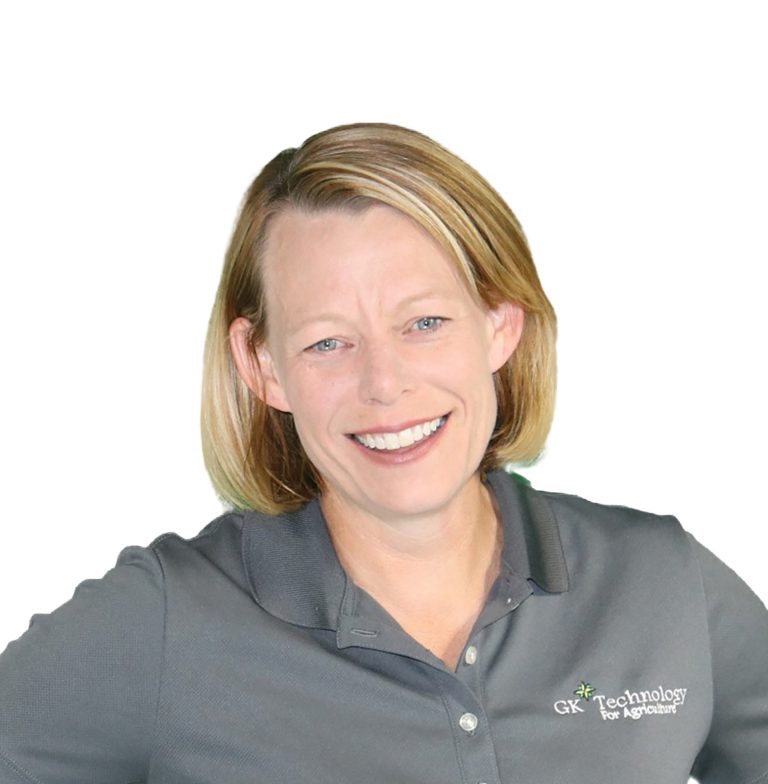
Your host
Sarah Lovas is a member of the GK Technology team. She hosts every episode, brings in guests from across the industry, and takes topic requests from listeners through the form below.
Episodes
Every episode, newest first.
Filter by format, open the show notes, read the transcript, or press play. New episodes appear here automatically when they publish.
Showing 37 to 48 of 55 episodesNewest first

18. Potassium, pH, and Precision Soil Sampling: John Breker Pt. 2
Join us for an enlightening discussion with John Breker from AGVISE Laboratories as he shares cutting-edge insights into managing soils with low and high pH, plus insights on managing soil potassium. Discover…
Show notes
Join us for an enlightening discussion with John Breker from AGVISE Laboratories as he shares cutting-edge insights into managing soils with low and high pH, plus insights on managing soil potassium. Discover how variable rate applications and the precision of zone and grid sampling can pinpoint soil pH variability within your fields, leading to more practical and accurate lime applications.
The conversation then broadens to address high soil pH levels and the crucial role of potassium in crop yield. John discusses the impracticality of large-scale pH reduction with elemental sulfur, suggesting more viable solutions like banding phosphorus and using chelated zinc starters. Additionally, he highlights the often-overlooked importance of potassium management, particularly in regions with fluctuating wet and dry cycles. This episode underscores the necessity of precision soil management in identifying specific areas needing attention, whether it's pH or nutrient issues, and how these insights can transform your soil management practices.
https://gktechinc.com/

17. What's in a Soil Test? Getting the Answers with John Breker Pt. 1
Get the download on soil tests and what they actually mean in our latest episode of Ag Geek Speak featuring AGVISE Laboratories' John Breker. We dive into the world of soil testing…
Show notes
Get the download on soil tests and what they actually mean in our latest episode of Ag Geek Speak featuring AGVISE Laboratories' John Breker. We dive into the world of soil testing methods, breaking down the pros and cons of phosphorus tests like Olsen and Bray, and the "new" Mehlich-3 method. Discover why Olsen is often preferred in the Great Plains and how the Mehlich-3 method, despite its promise as a universal extraction tool, might over-extract in calcareous soils. The discussion highlights the importance of selecting the right soil test for accurate nutrient analysis, a crucial step for any farmer or agronomist looking to optimize crop yields.
Managing soil pH and tackling nutrient deficiencies, especially iron deficiency chlorosis in soybeans, can be challenging. John provides an in-depth look at the role of calcium carbonate and the necessity of specific soil tests to combat IDC effectively. We also explore concepts like reserve acidity and cation exchange capacity, explaining how soil texture influences these factors and the difference between water pH and buffer pH. If you're keen on practical strategies for managing soil fertility and improving crop yields, this episode is a treasure trove of knowledge. Tune in and equip yourself with actionable insights from one of the field's leading experts!
https://gktechinc.com/

16. Digging Deep into Soil Science Part 2 with Professor Emeritus R. Jay Goos
Iron deficiency chlorosis (IDC) in soybeans can be a formidable challenge. What if you could manage it with precision agriculture? Join us for an enlightening conversation with Professor Emeritus Dr. R. Jay…
Show notes
Iron deficiency chlorosis (IDC) in soybeans can be a formidable challenge. What if you could manage it with precision agriculture? Join us for an enlightening conversation with Professor Emeritus Dr. R. Jay Goos, a leading authority in the topic, as we discuss how farmers can pinpoint and treat IDC in their fields. Dr. Goos delves into the intricate world of breeding IDC-resistant soybean varieties and discusses the vital role of resources like NDSU's IDC variety trials (https://vt.ag.ndsu.edu/view/6750).
What are some ways that IDC can be managed with precision agriculture methods? Dr. Goos, Sarah, and Jodi discuss. Knowing previous crop history and collecting satellite imagery from soybean years can be put together to create "IDC" management zones that can be targeted for management. These IDC maps can help direct the use of iron EDDHA fertilizers, variable seeding rates, and variable fertilizer rates to manage soybean IDC.
Ever wonder why old herbicides are making a comeback? Dr. Goose draws fascinating parallels between agricultural trends and fashion cycles, emphasizing the importance of increasing soybean density to combat IDC. From soil testing techniques to the potential of precision agriculture, we cover it all. Finally, we'll take a closer look at advancements in North Dakota agriculture, from managing salt-affected soils to the pivotal role of research extension centers and the North Dakota State Board of Agriculture Research and Education in driving agricultural innovation.
Tune in for these insights and more!
https://gktechinc.com/

15. Digging Deep into Soil Science with Professor Emeritus R. Jay Goos
Discover the secrets of soil fertility, straight from the expert himself, Dr. R. Jay Goos, Professor Emeritus at NDSU. From his humble beginnings on a farm in western Iowa to becoming a…
Show notes
Discover the secrets of soil fertility, straight from the expert himself, Dr. R. Jay Goos, Professor Emeritus at NDSU. From his humble beginnings on a farm in western Iowa to becoming a revered educator, Dr. Goos shares his unique journey. Immerse yourself in his passion for soil fertility and some helpful takeaways from Introduction to Soils. Sit back and listen as we discuss practical applications of soil science, the perfect intersection of earth science, biology, chemistry, and physics.
In this episode, Dr. Goos walks us through his extensive research work on chloride fertilization, urease and nitrification inhibitors, and phosphorus fertilizaiton in wheat. We dive into the challenges and triumphs of his research on Iron Deficiency Chlorosis (IDC) in soybeans, and the vital role of chloride as a micronutrient in North Dakota agriculture. Gain an understanding of the historical and contemporary practices of chloride application, and the significance of iron in plant health, all through the lens of a seasoned soil chemist.
In the final segment, join us for a deep dive into the advancements in soil microbiology and precision agriculture. Dr. Goos contrasts traditional soil microbiology methods with modern DNA testing, addressing the challenges of interpreting extensive data. Explore the dynamic rhizosphere affected by IDC and the innovative solutions provided by variable rate technology (VRT) in managing it. We wrap up with a discussion on the forward-thinking solutions from GK Technology, and our shared enthusiasm for putting these concepts to the test out in the field. Don't miss this stimulating conversation packed with insights about soil chemistry with the soil chemistry legend that is Dr. R. Jay Goos.
https://gktechinc.com/

14. Geeking Out About Aerial and Satellite Imagery with Clint Streeter
In this conversation, Clint Streeter, GK Technology’s “aerospace engineer” and GIS specialist, discusses the specifics of satellite and aerial imagery and its applications in agriculture. He explains the differences between various types…
Show notes
In this conversation, Clint Streeter, GK Technology’s “aerospace engineer” and GIS specialist, discusses the specifics of satellite and aerial imagery and its applications in agriculture. He explains the differences between various types of imagery, such as NAIP, Landsat, and Sentinel, and how they are used to create zones for field analysis. Clint also highlights the importance of practicing and honing the skill of zone creation, as well as the benefits of GK Technology's software in making zones from multiple images over multiple years. The conversation concludes with a discussion on the availability and management of imagery data.
Website Clint mentions that shows real-time collected images from Landsat 9 (this is super cool): https://earthnow.usgs.gov/observer/
https://gktechinc.com/

13. From Wilderness to Sky: Clint Streeter’s Path to Aerial Imagery Excellence
Clint Streeter, the GK Technology resident aerospace engineer and imagery pecialist, shares his background and journey into aerial imagery for agriculture. Clint grew up in eastern Montana and worked for the US…
Show notes
Clint Streeter, the GK Technology resident aerospace engineer and imagery pecialist, shares his background and journey into aerial imagery for agriculture. Clint grew up in eastern Montana and worked for the US Forest Service before pursuing a degree in Aviation and Natural Resources Management. He then flew for the Upper Midwest Aerospace Consortium (UMAC), collecting high-resolution aerial imagery for farmers and researchers. Clint discusses the challenges of planning flights and capturing imagery, as well as the technology and equipment involved. The images he took for UMAC were primarily of research plots for researchers, but he also worked with farmers during this time, providing high-resolution images for precision agriculture and crop planning. Clint implemented many improvements to the process of collecting and georeferencing aerial imagery and worked with UMAC until joining GK Technology.
https://gktechinc.com/

12. Making Zones Happen with Dr. Dave Franzen
This week Sarah and Jodi dive into the second part of their conversation with NDSU's Dr. Franzen, who shares his experience having watched precision agriculture develop over the course of his career. In…
Show notes
This week Sarah and Jodi dive into the second part of their conversation with NDSU's Dr. Franzen, who shares his experience having watched precision agriculture develop over the course of his career.
In this episode, Jodi and Sarah discuss:
- How management zones were developed and how they have revolutionized precision ag in North Dakota
- Where grid and zone sampling fits in different field situations
- Active optical sensors and their value for soil fertility management
- The implementation of precision agriculture faces barriers such as the lack of skilled technicians and the time constraints of farmers
https://gktechinc.com/

11. Accounting for Field Variability with Dr. Dave Franzen
https://gktechinc.com/
Show notes
https://gktechinc.com/

10. Making Water Flow with Paul Fuller Part 2
In part two of the conversation, Paul Fuller discusses the history of drainage, starting with the first known drain tile in the United States in 1838. He shares the story of John…
Show notes
In part two of the conversation, Paul Fuller discusses the history of drainage, starting with the first known drain tile in the United States in 1838. He shares the story of John Johnston, who used clay tiles to improve his farm's productivity. The conversation then moves on to the installation of drain tile, including the use of hand-dug clay tiles in the past and the modern methods of tile installation. Surface drainage planning is explored, with a focus on determining the elevation of the field and finding the most effective outlets. The use of LIDAR data in drainage planning is also discussed, highlighting its accuracy and limitations. The chapter concludes with a discussion on getting started with drain tile planning, emphasizing the importance of identifying the outlet and utilizing resources like ADMS software tutorials. In this conversation, Paul Fuller discusses various aspects of drain tile planning and water management. He emphasizes the importance of gathering initial information and conducting watershed modeling to determine the right approach. Paul also explains the process of surface drainage and proposing mains, as well as determining tile spacing using online calculators. He highlights the significance of soil maps and discusses the different approaches to tile drainage in various regions. Additionally, Paul explores alternative water management techniques such as conservation drainage and drain tile water recycling. The conversation concludes with tips for effective tile planning and the role of Kendra in naming the podcast.
https://gktechinc.com/

9. Making Water Flow with Paul Fuller Part 1
In this conversation, Paul Fuller, a drainage expert, discusses various aspects of drainage and precision agriculture. He shares his personal background and how he got started in the field. The conversation covers…
Show notes
In this conversation, Paul Fuller, a drainage expert, discusses various aspects of drainage and precision agriculture. He shares his personal background and how he got started in the field. The conversation covers the importance of surface drainage and the promotion of tile drainage. Paul also talks about his work with SD Drain and the different locations where he has worked on drainage projects. The conversation concludes with a discussion on the planning process for drainage and the importance of having a good drainage plan.
https://gktechinc.com/

8. The Art of Crop Planning with Josh Stutrud Part 2
In this conversation, Sarah and Jodi talk with special guest Josh Stutrud aboutProtein monitors on combinesWhat data from protein monitors can help farmers manage (protein levels! not only for segregation of grain…
Show notes
In this conversation, Sarah and Jodi talk with special guest Josh Stutrud about
- Protein monitors on combines
- What data from protein monitors can help farmers manage (protein levels! not only for segregation of grain but for management of nitrogen)
- Nitrogen management and determining nitrogen use efficiency (NUE)
- Factors that can influence NUE
- How Josh plans to use See & Spray (TM) technology this upcoming season
You can find the first part of this conversation here (https://www.buzzsprout.com/2297340)
Josh can be found on Instagram @ndbarleyfarmer
If you want to work with Josh on research on this topic or have specific questions for him regarding the technology he's implementing on his farm, reach out to us at GK (https://gktechinc.com/contact-us/) and we will be happy to share you Josh's additional contact information.
Additional resources:
Paper shared by Dr. Rigas Karamanos on nitrogen partitioning in hard red spring wheat, figure 2: https://www2.nrel.colostate.edu/assets/nrel_files/labs/paul-lab/docs/NREL_Paul_Campbell_cjss78-004.pdf
https://gktechinc.com/

7. The Art of Crop Planning with Josh Stutrud Part 1
In this conversation, Sarah and Jodi talk with special guest Josh Stutrud, a farmer from north of Rugby, North Dakota, to discuss the importance of managing protein in malting barley. Josh strives…
Show notes
In this conversation, Sarah and Jodi talk with special guest Josh Stutrud, a farmer from north of Rugby, North Dakota, to discuss the importance of managing protein in malting barley. Josh strives to use cutting-edge precision technology to more efficiently manage inputs on every acre. Farming in the Prairie Pothole region means that Josh deals with variability in pretty much every field that he and his dad farm. Managing protein for malt barley means managing variability. This is part one of a two-part discussion with Josh, so make sure to come back in two weeks to check out the second part of this conversation.
https://gktechinc.com/
Request an ag topic
Ask Sarah.
Do you have an ag related topic you would like Sarah to discuss on the podcast? Send it in with the form.
Do you have an ag related topic you would like Sarah to discuss?
Questions
About Ag Geek Speak.
Ag Geek Speak is the podcast from GK Technology Inc, the precision ag software and mapping company in Halstad, Minnesota. Team member Sarah Lovas talks about precision agriculture, agriculture mapping, agronomy, and drainage with guests from across the industry.
Tiny Bytes are the short episodes of Ag Geek Speak, usually 7 to 15 minutes, each covering one precision ag topic such as NDVI, shapefiles, soil sampling, or GPS versus GNSS. They are numbered with a .5 (for example 6.5) and sit between the full episodes in the same feed. Use the Tiny Bytes tab above to see only those.
Right here on this page, on Buzzsprout, on YouTube, or in any podcast app by adding the RSS feed.
Yes. Every episode has a transcript. Use the "Read transcript" link under any episode above.
Use the Ask Sarah form on this page. Tell her the ag topic you want covered and she may feature it in a future episode.
Tiny Bytes now live on this page with the full episodes. Select the Tiny Bytes tab to see only the short episodes.
Contact
Get in touch with GK.
Tell us about your operation and what you're trying to solve.
Halstad, MNA real person on the Halstad team reviews every message.
Call
Follow GK
Find us
GK Technology, Inc.
305 5th Street East
Halstad, MN 56548